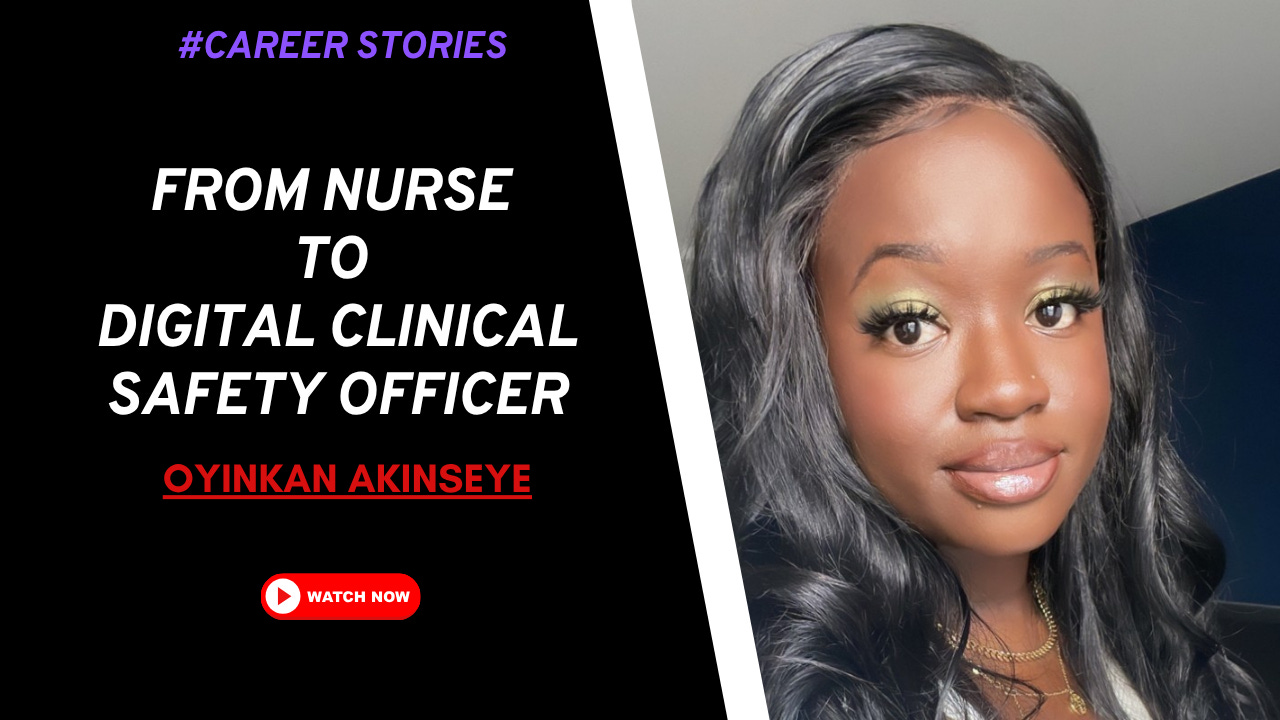
Hi friends — this week’s piece is inspired by a conversation with a nurse who found her way from the ward into digital clinical safety. If you’ve been wondering what this path looks like in real life, this one’s for you.
If you’ve ever stood on a busy ward thinking, there has to be a safer way to do this, you’re already halfway into the mindset of digital clinical safety. In a recent conversation, I spoke with a mental health nurse who became a Clinical Safety Officer (CSO). Her journey is the kind that cuts through myths and shows you the work as it is human, learnable, rewarding and worth doing.
Why clinical experience still matters
Digital clinical safety is not a tech vanity project. It’s clinical practice expressed through systems, documents, and decisions that keep people safe when software enters care. In the UK, CSOs are registered health professionals for a reason: you are assessing risk with a clinician’s eye and you sign your name to that judgement. That accountability never leaves you, even when your “patient” is a flow diagram or a feature list.
This is also why your background is an asset, not a hurdle. Triage instincts, pattern-spotting, handover clarity, talking to families under pressure — they become the backbone of safety case work. The nurse I interviewed described constantly assessing risk on the ward and carrying that habit into hazard analysis. It’s the same muscle, just applied to a different object.
The moment digital comes into focus
Many clinicians didn’t fall in love with tech at university. For some, the light switched on during the pandemic. Remote monitoring, video appointments, PPE logistics, service continuity — that period forced problem-solving at scale and introduced digital as a survival tool, not a trend. Stepping into a health tech company during that time was a natural extension of trying to keep patients safe when the usual playbook broke.
That first role might look like “customer success,” implementation, or configuration rather than “safety.” Don’t get precious about job titles. Those roles teach you how products are built, shipped, supported, and changed. You learn to navigate sprints, user feedback, and the messy realities of rollout. That context becomes gold when you later sit down to write a safety case.
Expect a culture shift
Moving from an NHS team to a supplier is a genuine shift. Priorities feel different. Pace is faster. Revenue targets exist. Meetings sound like they’re in another language when people discuss architecture, infrastructure, staging environments, redundancy and data flows. You won’t know the lingo on day one. That’s fine. Note terms. Ask for plain-English explanations. Look them up later. Keep learning. Everyone else is, too.
Courses help, but timing matters. There’s value in getting your hands dirty first, then taking structured learning to lock in what you’re seeing. PRINCE2 gives general project discipline; Agile or SAFe gives product language if you’re in a bigger shop with rapid release cycles. Take them when the theory can attach to real work, not as a ticket to enter.
What a CSO actually does
At its heart, the job is systematic curiosity. You learn the product, its user journeys, and its architecture. You identify ways patients might be harmed by its use. You review proposed controls, suggest stronger ones, and keep pushing risk down to a level that is as low as reasonably practicable. You document that story clearly so that clinicians and implementers can understand it and act on it.
In the UK, you’ll work to DCB 0129 (for manufacturers) and DCB 0160 (for deploying organisations). You’ll hold workshops with product, training, engineering and operations to build a shared hazard log. You’ll ask for demos and, where possible, hands-on access to a training or staging environment so you can see how the thing behaves. You’ll read training packs, test scripts and policies. You’ll write. A lot. Meetings happen, but most days are documents, reviews and nudging teams toward safer choices.
Go-lives are not a victory lap for safety; they’re a checkpoint. In an ideal world the safety case is signed off before go-live. Reality is messier. If hazards are not adequately controlled, the right answer may be to delay. That’s not being difficult. That’s doing the job you’re registered to do.
Transferable skills you already have
Organisation: You’ve run a bay on a short-staffed shift. Juggling priorities while keeping people safe is second nature. That maps to managing safety actions, tracking evidence, and closing risks.
Writing: Not academic padding but clear, audience-aware writing. Safety documentation must be readable by clinicians and service teams. If you can write a discharge summary that’s precise and useful, you can learn to write a hazard log that lands with its readers.
People skills: Safety is a team sport. Product wants insight to improve designs. Delivery wants a green light. Engineering wants stronger tests. You need to understand different priorities, create a shared view of risk, and keep everyone moving. Those conversations go better when you’re credible, calm and clear. That’s clinical to the core.
A simple entry strategy

Start close to your domain. If you’re from ICU, theatres, maternity, mental health; look for vendors and projects in that space. Your domain knowledge is real leverage. Employers want someone who already understands the context of use and the failure patterns to watch for.
Land an adjacent role if you have to. Implementation, configuration, customer success, clinical applications specialist. These roles teach you the product lifecycle and give you the raw material for safety thinking.
Build the habit of structured learning. Keep a running glossary. Take short, targeted courses on cloud basics, information governance, testing fundamentals and human factors. Add formal certifications once your daily work gives them shape.
Practice evidence gathering. For any feature or workflow, ask: what can go wrong, how likely is it, how severe could harm be, what controls exist, which ones are missing, and how will we prove the control actually works. That mental loop is the job.
Find people. Reach out to practicing CSOs on LinkedIn. Attend Digital Health forums. Go to events like HETT and listen for the problems people are really wrestling with. Most CSOs are happy to share how they got started and what they wish they’d known earlier.
Imposter feelings are normal
Switching sectors is disorienting. You will sit in a meeting and feel behind. The nurse I interviewed felt it. I felt it when I moved into digital projects and heard terms I’d never seen in a care plan. The answer is not to disappear. Ask the question. Note the term. Follow up with a simple, “Can you walk me through that?” People respect clarity more than bluffing. With time, the new language becomes yours too.
Also, don’t underestimate the value you bring. A good safety discussion is a skill exchange. Engineers know the system’s guts. Product knows the roadmap. You know the realities of practice and the kinds of errors humans make under pressure. When all of that sits around the same problem, systems get safer.
Where the role is heading
AI has raised the stakes. More vendors are weaving AI features into clinical pathways. The tools are racing ahead; regulation tries to keep up. That tension puts clinical safety at the centre of responsible deployment. Expect more demand for CSOs who can interrogate models and data flows, challenge claims, and anchor decisions in patient safety. The fundamentals don’t change: understand the product, surface hazards, design controls, and hold the line when controls are weak.
What “success” looks like
It isn’t the loudest launch or the prettiest deck. It’s helping an organisation build and implement safely, leaving behind evidence that stands up to scrutiny, and knowing that end users can do their work without the system tripping them up. For many clinicians moving into safety, that still scratches the original itch: helping people, just through a different route.
Your next steps this month
Map your domain: list three vendors or projects in your clinical area and read their public materials.
Build your glossary: write down every unfamiliar technical term you hear this week, then look them up.
Shadow a system: ask for a demo environment and follow a single patient journey end to end.
Start a mini safety case: pick one workflow and practice writing a plain-English hazard log entry with proposed controls.
Message a CSO: one short note on LinkedIn asking for a 15-minute chat about how they started. from-nurse-to-digital-clinical-…
You don’t need to vanish into a postgraduate degree to begin. You need curiosity, clinical judgement, steady writing, and the willingness to learn out loud. Digital clinical safety is built by people like you who care about patients and are ready to make systems safer, step by step. from-nurse-to-digital-clinical-…
If this resonates, save it. Share it with a colleague who’s been hovering at the edge of a transition. And when you’re ready, start.
Watch the full episode here.
Listen on Spotify
See you in the next episode.
Cheers,
Dr. Ron
Join over 6000+ subscribers at Behind The Scenes in Health with Dr.Ron’s substack where we share insightful information around healthcare and health tech.
Help us grow on YouTube channel by subscribing, commenting and sharing as we post new videos every Friday by 7pm (WAT). Give us a follow on TikTok
If there are topics you would love to read about or guests you would like to see and hear on the podcast, please email me at ronald@mrimedic.com or podcast@mrimedic.com
Here is our linktree. Feel free to explore our pages.
Stay tuned for more inspiring stories and insights into the world of alternative careers. Subscribe to our blog for updates and join us on this journey where passion meets purpose.