A patient is sitting in front of you, deciding whether to join a trial that might help them and might not. Your job over the next twenty minutes is to make sure they truly understand what they are agreeing to, to consent them properly, and then, once they are enrolled, to administer the investigational treatment and watch closely for any reaction. Later you will complete the case report forms that turn their experience into usable data. It is clinical work and research work at the same time.
For a nurse, this is the surest first move off the ward that our data can point to. It keeps your registration and your hands-on skills central.
What the role actually does
• Recruit, consent and manage a portfolio of research participants across concurrent clinical trials
• Administer investigational treatments including IV drugs and chemotherapy, and conduct clinical procedures such as phlebotomy, cannulation, ECGs and central line management
• Monitor participants for adverse events and side effects, reporting in accordance with protocol and regulatory requirements
• Maintain accurate trial documentation and complete Case Report Forms
• Liaise with multidisciplinary teams, study sponsors and external agencies to ensure protocol adherence
• Provide patient-centred education, advocacy and psychological support
A day in the life
You will coordinate and deliver a caseload of clinical research studies across inpatient and outpatient settings, assessing participants prior to treatment, administering investigational therapies, and monitoring side effects in line with study protocols and ICH GCP guidelines. You will collect and process biological samples, complete Case Report Forms using electronic data capture systems, and liaise with multidisciplinary teams, study sponsors and participants to ensure regulatory compliance and high-quality data capture. You will also provide education and advocacy support to research participants throughout their trial journey, and contribute to the supervision and development of junior nursing colleagues.
What it pays
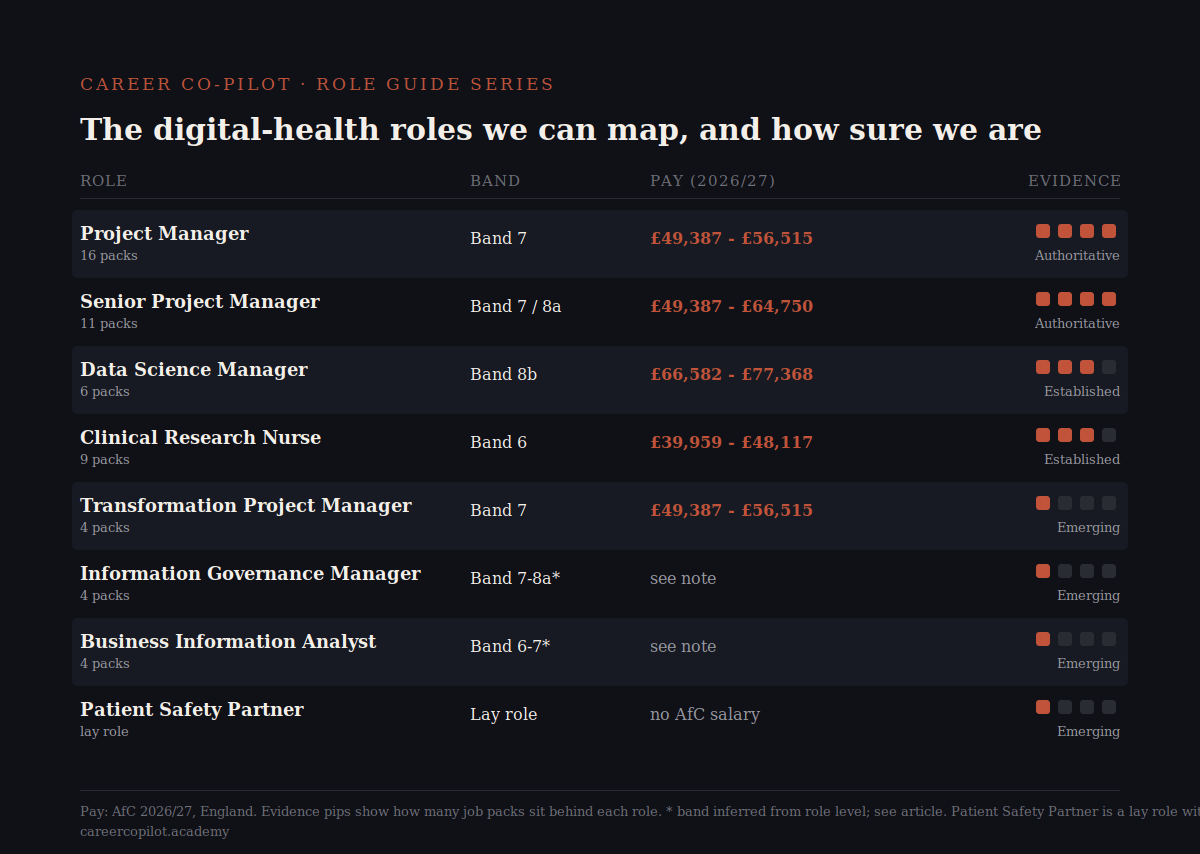
This is an Agenda for Change Band 6 role. On the 2026/27 pay scale for England, that means:
What it screens for
This is the rare route where your clinical skills are not a transferable analogy, they are the actual requirement. Cannulation, central line management, adverse event monitoring, good clinical practice: these are your ward skills, named directly.
What it adds on top is the research layer: informed consent to a protocol, case report forms, and regulatory compliance to ICH GCP. That is learnable, and much of it is taught on the job.
What is hard about it
Managing a complex and concurrent portfolio of studies across multiple specialties demands advanced organisational skills and the ability to prioritise effectively under pressure, particularly when coordinating participant visits, data deadlines and protocol amendments simultaneously. Communicating complex clinical trial information to diverse patient groups, including those with serious or chronic illness, requires sophisticated communication and sensitivity, especially when navigating informed consent or adverse event discussions. Maintaining rigorous regulatory compliance and accurate documentation across multiple sponsor requirements while delivering hands-on clinical care presents a persistent dual demand on time and attention to detail.
Who moves into it, and where it leads
Progression to Band 7 typically requires demonstrable leadership of a research portfolio or specialist area, experience in study set-up and feasibility assessment, and the ability to line manage and develop a team. Candidates moving upward are expected to contribute to strategic research development, lead on audit or service improvement, and hold or be working towards a relevant postgraduate qualification or significant specialist expertise.
You will typically work within a Clinical Research Facility or research nursing team, reporting to a Senior or Lead Research Nurse and working closely with principal investigators, clinical research coordinators, and wider multidisciplinary teams including medics, pharmacists and laboratory staff. You will manage your own participant caseload with a degree of autonomy while also supervising Band 5 nurses, healthcare assistants and students.
How to get in
This is one of the more direct moves in our data, because the entry requirement is the nursing you already do.
• Look for Band 6 Clinical Research Nurse posts, which are advertised regularly at trusts with a research facility. Your NMC registration and ward experience are the qualification.
• Good Clinical Practice (GCP) training is the main research-specific requirement, and is often provided once you are in post.
• If you can, spend time with your trust’s research delivery team first, even informally, to see how a study runs.
• Frame your ward experience around the research skills that matter: careful monitoring, accurate documentation, and patient communication under difficult circumstances.
Cheers,
Dr. Ron
Join over 6000+ subscribers at Behind The Scenes in Health with Dr.Ron’s substack where we share insightful information around healthcare and health tech.
Help us grow on YouTube channel by subscribing, commenting and sharing as we post new videos every Friday by 7pm (WAT). Give us a follow on TikTok
If there are topics you would love to read about or guests you would like to see and hear on the podcast, please email me at ronald@mrimedic.com or podcast@mrimedic.com
Here is our linktree. Feel free to explore our pages.
Stay tuned for more inspiring stories and insights into the world of alternative careers. Subscribe to our blog for updates and join us on this journey where passion meets purpose.
The figures here come from Career Co-Pilot, my platform for non-clinical NHS career intelligence, built on real NHS job-pack data. Full breakdown at careercopilot.academy.